A dramatic week in Chareidi politics has brought major developments on several fronts, from a significant move by Shas chairman Aryeh Deri to strengthen the party’s rabbinic leadership under Rav Yitzchak Yosef, to escalating threats of a split within United Torah Judaism and growing frustration with Chareidi political leadership.
The developments were analyzed on Kikar HaShabbat’s “Thursday Night Studio,” hosted by Yishai Cohen. The panel included Kikar HaShabbat editor Chanani Breitkopf, Channel 16 political correspondent Shlomi Gil, former Elad Mayor Tzuriel Krispel and commentator Avi Greenzeig, who examined the political maneuvering that dominated the week and its potential implications for the Chareidi parties.
The discussion also focused on the growing controversy surrounding Chareidi participation in the Likud primaries and the political battle involving Motty Babchik and Prime Minister Benjamin Netanyahu.
The Dramatic Letter and Shas Leadership
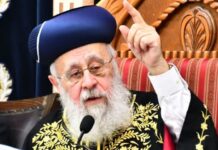
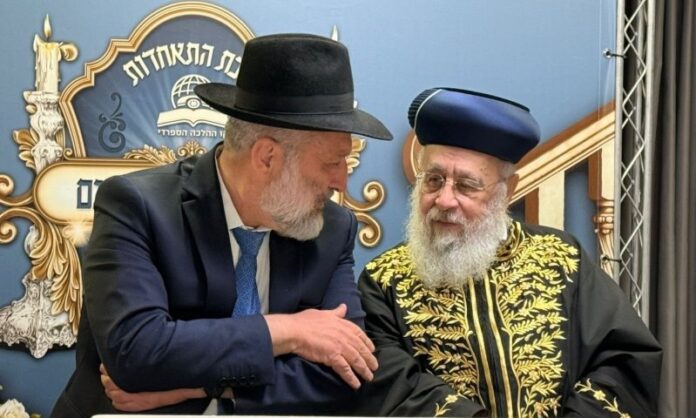
The panel began with Shas chairman MK Aryeh Deri’s highly significant visit to the home of the Rishon LeTzion, Rav Yitzchak Yosef.
During the meeting, Deri presented Rav Yosef with a personal letter from Rav Moshe Maya, the senior member of the Shas Moetzes Chachmei HaTorah, who appointed Deri as his special emissary for the mission.
In his letter, Rav Maya stressed that Shas has remained committed to preserving the legacy and path established by Maran Rav Ovadia Yosef zt”l and would continue doing so in the future.
Against that backdrop, Rav Maya asked Rav Yitzchak Yosef to assume responsibility for guiding and leading the implementation of his father’s legacy within Shas and throughout the movement’s institutions. The request was based on Rav Yosef’s position as the continuation of his father’s path, after Rav Ovadia himself designated him for that role before his passing.
Panelists examined the considerable political and internal Shas ramifications of the move and what the development could mean for the future rabbinic leadership of the party.
UTJ Split Threat Grows as Chareidi Frustration Mounts
The discussion then shifted to the increasingly serious possibility that Degel HaTorah could break away from Agudas Yisroel ahead of the upcoming elections and run independently rather than as part of the longstanding United Torah Judaism alliance.
The panel considered whether the Gedolei Yisroel would ultimately authorize such a dramatic step, particularly given the electoral risks involved.
A separate Degel HaTorah campaign could potentially leave Agudas Yisroel struggling to cross the electoral threshold, a development that could have far-reaching consequences for Chareidi representation and significantly reshape Israel’s political map.
The commentators also addressed another issue increasingly evident within the Chareidi community: widespread disappointment with its political representatives and their performance during the outgoing Knesset term.
That frustration has fueled discussion surrounding potential alternative parties, including “HaTzibur HaChareidi,” headed by Motty Leitner. The panel debated whether such new political movements genuinely represent dissatisfied Chareidi voters or whether their apparent support is being overstated.
Chareidi Likud Primary Controversy and Babchik’s Battle
The final portion of the program focused on the wave of Chareidi Likud members who participated in the party’s primaries, an issue that generated widespread headlines and claims that “the Chareidim are taking over the Likud.”
Panelists sought to separate the headlines from the actual numbers, examining how many Chareidim had genuinely registered as Likud members and how many ultimately turned out to cast ballots in the primary.
The discussion then turned to the political figure at the center of much of the controversy: Motty Babchik.
The commentators analyzed whether Babchik had actually accomplished his political objective through the primary effort and, more significantly, whether the results amounted to a victory for him in his increasingly tense power struggle with Prime Minister Binyomin Netanyahu.
{Matzav.com}