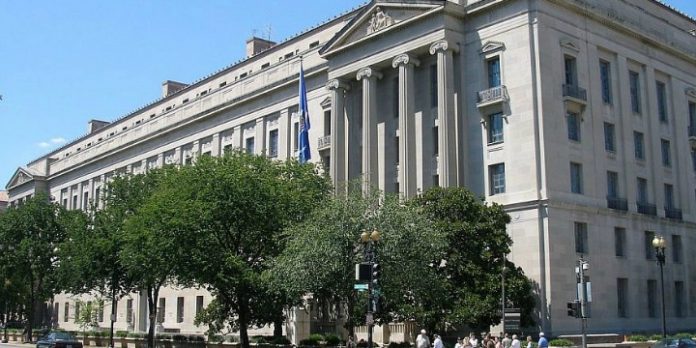
Justice Department antitrust officials were instructed this week to suspend cooperation with Canadian authorities amid escalating U.S.-Canada trade tensions, although the DOJ later said the sweeping directive resulted from a misunderstanding and was not intended to halt work with Canada.
Lynda Marshall, who heads the Antitrust Division’s international section, sent an email Wednesday directing personnel to stop collaborating with Canadian officials on cases and policy matters, according to emails reviewed by The Wall Street Journal. No explanation for the instruction was included in the message.
A second email sent Friday instructed section chiefs within the Antitrust Division to compile lists detailing the areas in which they were working with Canadian counterparts and submit them by the end of the day.
The Justice Department, however, pushed back on the suggestion that it had ordered a broad suspension of cooperation, saying the “alleged direction was never given to anyone.”
According to the DOJ, officials had merely been told to “temporarily hold off on a scheduled meeting on a specific investigation until the DOJ’s antitrust team had more time to prepare.”
The Wall Street Journal subsequently reported that Marshall had misunderstood the original instruction and that cooperation with Canadian authorities was permitted to continue.
The episode comes as relations between Washington and Ottawa have deteriorated amid a widening trade battle between President Donald Trump’s administration and the government of Canadian Prime Minister Mark Carney. The latest friction has included new tariffs as well as Trump’s executive order directing the U.S. federal government to refer to Lake Ontario as “Lake America.”
The Lake Ontario directive applies at the federal level in the United States and does not require Canada, international organizations or individual U.S. states to adopt the new name. The move nevertheless became another flashpoint in relations between the neighboring countries, whose trade relationship has grown increasingly contentious since Trump returned to the White House in January 2025.
The trade dispute has now resulted in tariffs affecting tens of billions of dollars in commerce moving across the U.S.-Canada border.
Ottawa has announced that retaliatory tariffs against American products will take effect Sept. 8 following the Trump administration’s imposition of 50% tariffs on approximately $20 billion in Canadian goods last month. The measures followed the collapse of negotiations over a broader trade agreement.
Carney said Canada “will match Washington’s new tariffs dollar for dollar in order to protect Canadian workers, farmers, families, and businesses.”