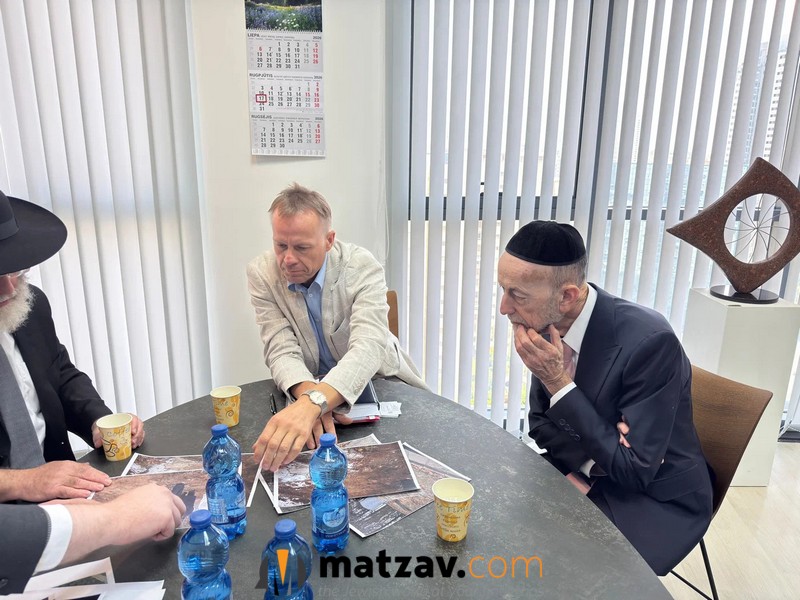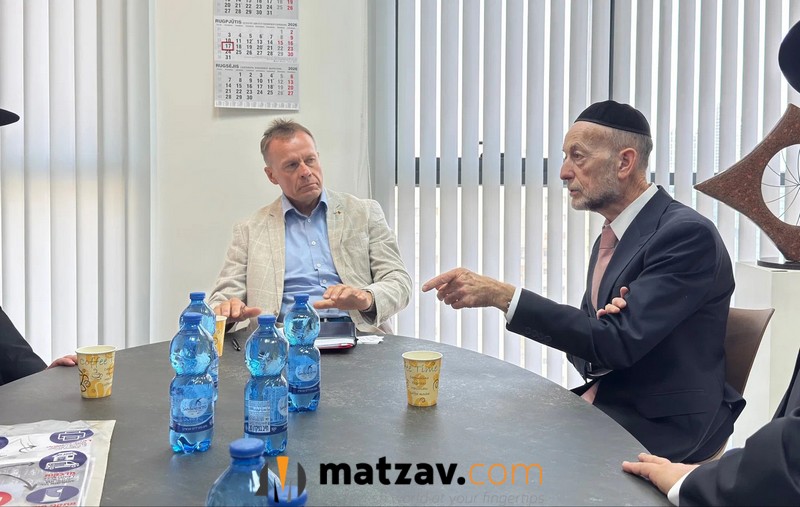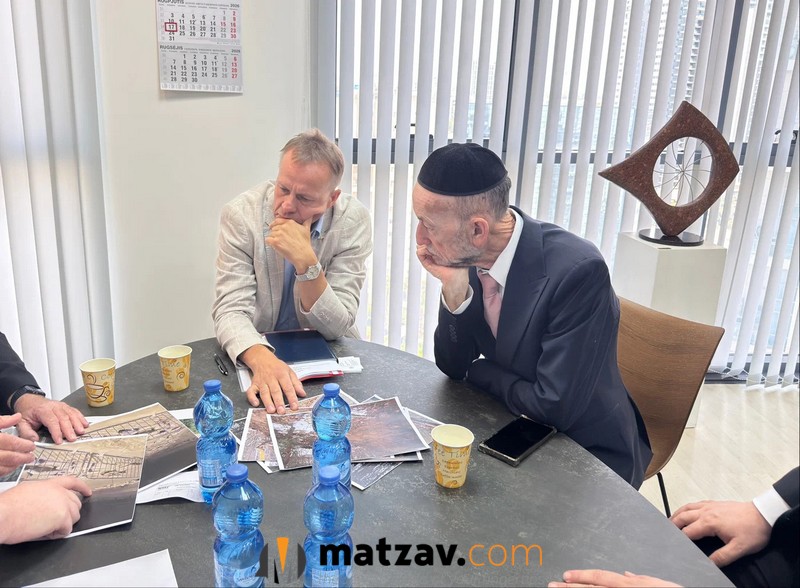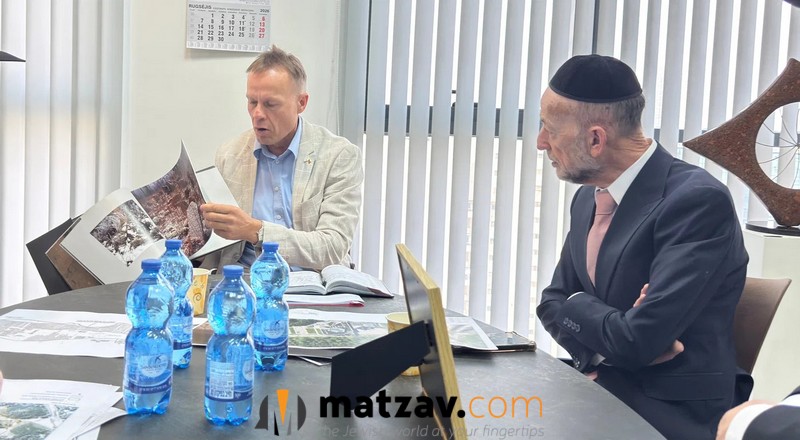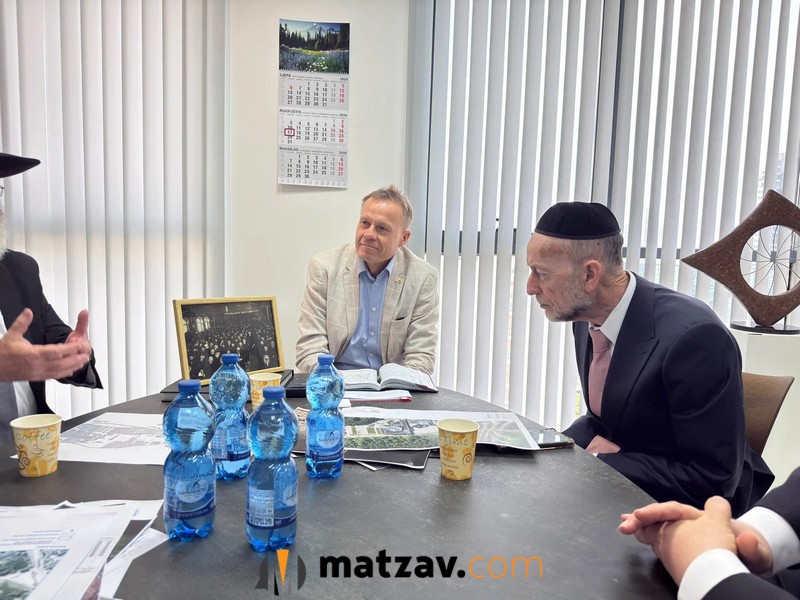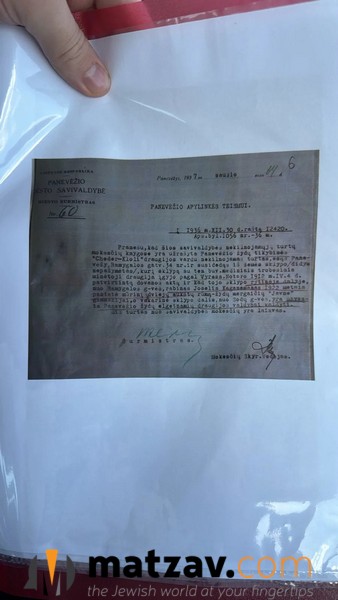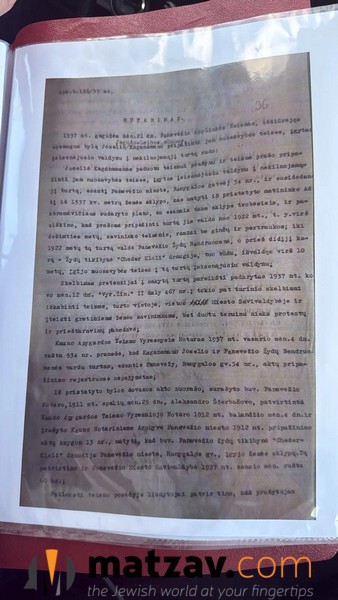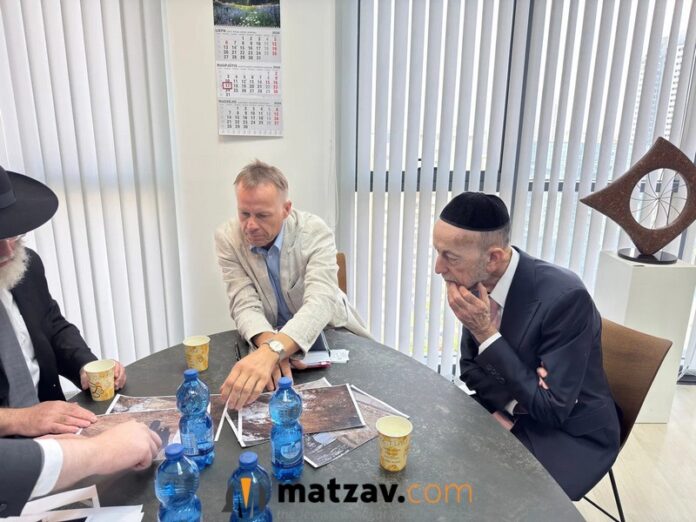
Lithuanian Ambassador to Israel Audrius Bruzga presented the documents to MK Uri Maklev during a meeting at the Lithuanian Embassy. The ambassador compiled a special binder containing official records he located in Lithuania’s state archives documenting Rav Kahaneman’s activities in the city of Ponovezh during the 1920s and 1930s.
The discovery grew out of Maklev’s ongoing relationship with the Lithuanian ambassador, with the two having worked in recent years on efforts to preserve Lithuania’s Jewish heritage and the remnants of the flourishing Torah world that existed there before the Holocaust.
Approximately eight months ago, Maklev arranged a special visit for Bruzga to the Ponovezh Yeshiva in Bnei Brak, which Rav Kahaneman established after the Holocaust and named for the Lithuanian city where his original yeshiva had stood.
During that visit, Bruzga met with the yeshiva’s president, Rav Eliezer Kahaneman, a grandson of Rav Yosef Shlomo Kahaneman, who shared with him the history of the yeshiva and described its reestablishment in Eretz Yisroel following the destruction of European Jewry.
The ambassador and Maklev subsequently visited the home of Ponovezh Rosh Yeshiva Rav Boruch Dov Povarsky, where their conversation focused on the legacy of Lithuanian Jewry and efforts to preserve Jewish cemeteries throughout Lithuania.
That visit apparently sparked the ambassador’s curiosity about the yeshiva’s Lithuanian roots. Bruzga told Maklev during their latest meeting that he subsequently began searching Lithuania’s official archives for records connected to Rav Kahaneman and his activities in Ponovezh.
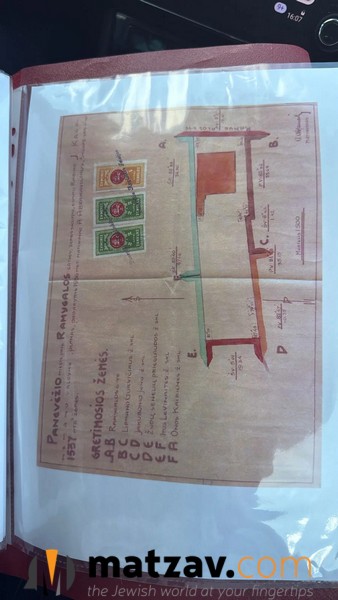
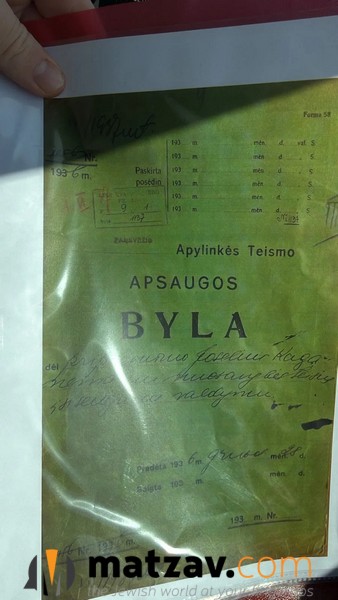
The search produced a remarkable collection of historical material, including municipal records, land diagrams, building permits and legal documents bearing Rav Kahaneman’s name.
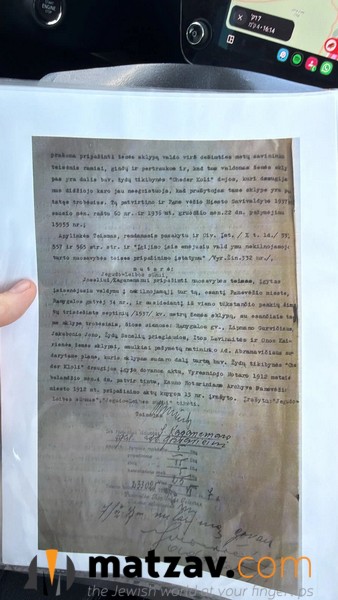
Among the documents is a 1936 authorization from the municipality of Ponovezh referring to a permit originally granted to Rav Kahaneman on July 13, 1922, allowing him to construct a three-story brick building on property belonging to the Jewish community on Ramygalos Street.
Perhaps the most significant discovery is a district court ruling from Ponovezh dated May 21, 1937. The case dealt with a request to formally recognize Rav Kahaneman’s rights to property located at 34 Ramygalos Street.
According to the ruling, the property covered 1,537 square meters and contained buildings that were used by the local Jewish community.
The court records also trace the history of the property. Documents submitted in the case indicated that before World War I, the land had belonged to a Jewish religious organization known as “Cheder-Kloil.” It later came under the control of the Jewish community of Ponovezh, which maintained continuous possession of the property for more than a decade beginning in 1922.
As part of the legal proceedings, an official notice was published allowing anyone with objections to the claim to come forward. According to the court ruling, no objections were submitted.
After reviewing the documentation and testimony, the court formally recognized Rav Kahaneman’s rights to the property on the basis of the lengthy period of continuous possession.
The collection also includes detailed plans of the property and its buildings, along with additional official records from the Ponovezh municipality. Together, the documents provide a rare glimpse into the scope of Rav Kahaneman’s activities in the Lithuanian city during the years preceding the Holocaust.
The discovery also comes amid an unusual historical coincidence. Questions surrounding rights and control of the Ponovezh Yeshiva in Bnei Brak have recently returned to the headlines following new legal rulings. Now, an 89-year-old Lithuanian court decision has surfaced dealing with the rights of the yeshiva’s founder to property in the original city of Ponovezh. There is no legal connection between the two matters, but the historical parallel is striking.
Only a few years after the 1937 ruling, the Jewish community of Ponovezh was destroyed during the Holocaust. Rav Kahaneman survived and set about rebuilding in Eretz Yisroel the Torah world that had been devastated in Europe, naming the yeshiva he established in Bnei Brak after the Lithuanian city he had left behind.
Maklev thanked Ambassador Bruzga for taking the initiative to search for the records and for the effort involved in locating them. He said the documents constitute historically important material for both the Torah world and the preservation of Lithuanian Jewish heritage.