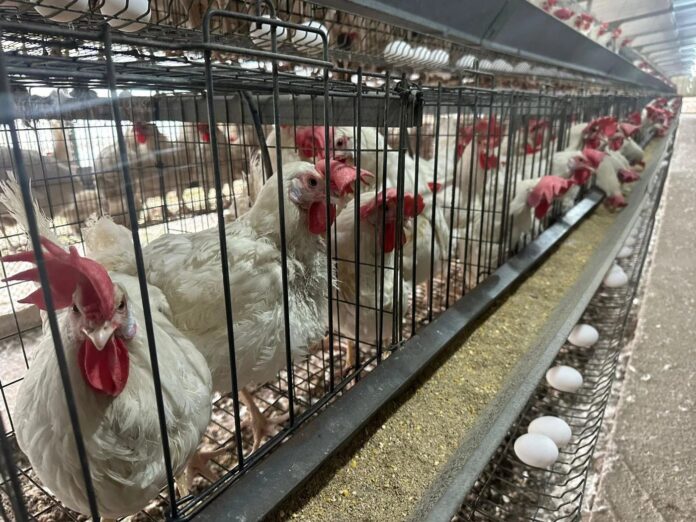
Israel’s Agriculture Ministry has temporarily blocked the import of frozen chicken from Brazil, removing a Brazilian poultry plant owned by Baladi from the list of facilities approved to export to Israel following a renewed examination of veterinary oversight and production procedures.
Dr. Sergio Dolev, acting director of the Agriculture Ministry’s Veterinary Services, informed Baladi that its Brazilian poultry facility was being removed from the approved list and that Brazil would, for the time being, not be authorized to export poultry meat to Israel.
The ministry said the decision followed a reassessment of the approval process, which determined that imports could not proceed until officials conduct an on-site examination of the production system and determine whether Brazilian authorities are capable of supervising it in accordance with Israel’s stringent requirements.
Agriculture Ministry officials stressed that the decision was based on professional considerations involving public health and animal welfare. Should the approval process be renewed, a team of Veterinary Services experts is prepared to conduct a comprehensive inspection before officials consider allowing Brazilian poultry imports into Israel.
The Agriculture Ministry’s move comes amid a broader dispute that has already reached Israel’s Supreme Court following a petition filed by Baladi concerning the establishment of procedures and kashrus approvals for importing poultry from abroad.
During a High Court hearing last month, the Chief Rabbinate emphasized “the need to establish a measured and orderly halachic and administrative process on which the professional officials at the Chief Rabbinate are working.”
The Chief Rabbinate instructed its professional staff to formulate recommendations and bring them before the Chief Rabbinate Council for approval within 120 days. The judges agreed to the requested timetable.
Kashrus officials welcomed the Agriculture Ministry’s decision to suspend the veterinary approval process, saying it would prevent imports from moving forward before the necessary halachic safeguards are fully established.
According to those officials, shechitah of poultry abroad and the supervision of overseas production involve significant halachic complexities. Suspending the proposed imports, they said, removes pressure to establish arrangements hastily and helps ensure that no products reach Israeli consumers until comprehensive inspections have been completed and a rigorous system of halachic supervision is in place.
Baladi, however, said it intends to pursue available legal avenues in an effort to overturn the Agriculture Ministry’s decision.
Israel’s domestic poultry industry, particularly farms operating in peripheral areas and communities near the country’s borders, is considered an important component of national food security. Israel has one of the world’s highest rates of chicken consumption, with domestic demand currently supplied entirely through locally raised poultry operating under Israeli supervision.
Slaughterhouses throughout Israel also operate under continuous oversight from leading kashrus organizations, creating a supervision chain extending from poultry farms through shechitah and processing until the product reaches consumers.
Kashrus officials stressed that beyond the legal and commercial questions surrounding imported poultry, protecting kashrus standards and consumers must remain the overriding priority.
They said the insistence on thorough examinations without shortcuts—both regarding veterinary and health standards and the detailed halachic requirements governing shechitah performed overseas—is essential to preventing serious kashrus problems for observant and mehadrin consumers in Israel.
{Matzav.com}