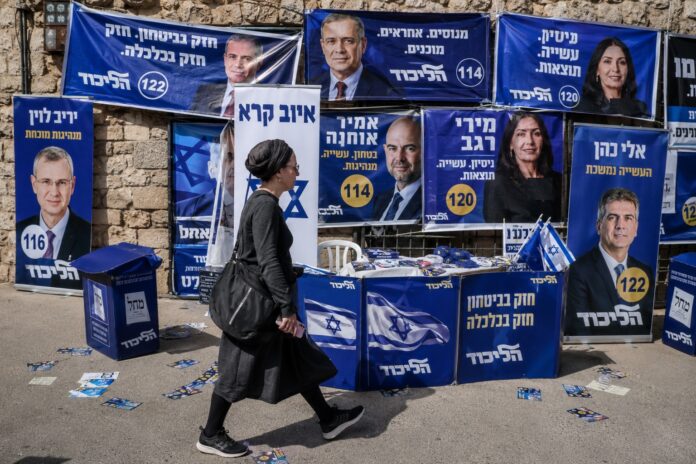
The final results of the Likud primaries could undergo another shakeup after the party’s Supreme Court unanimously ordered disputed double-envelope ballots from Yerushalayim and Ashdod to be opened and counted, potentially altering candidates’ positions on the Knesset slate.
The ruling came after the court accepted an appeal filed by Shlomo Elboim and lifted the freeze that had prevented the ballots from being counted. The envelopes were cast by registered party members whose names did not appear in the official voter registry.
The decision could reopen several battles for placement on the Likud list, particularly in positions where only a handful of votes separate competing candidates. The vote count had previously been frozen amid the dispute over whether the contested ballots could be included.
At the center of Elboim’s appeal was his contention that the membership forms belonging to the affected voters had been properly submitted to the Likud apparatus. However, because of an internal administrative failure, their names were omitted from the voter registry. They were nevertheless permitted to cast ballots using double envelopes, although those votes were subsequently excluded from the running totals.
The Likud Supreme Court sided with Elboim, effectively determining that the party administration could not benefit from a mistake made by its own internal apparatus. Under the ruling, the envelopes will now be opened, the ballots counted and the additional votes incorporated into the overall tally before the final primary results are announced.
The political consequences could be significant, since relatively few votes may be enough to reshuffle several candidates on the slate. The margins are especially narrow toward the lower portion of the list, where even a small number of additional ballots could change the rankings.
One of the contests that could be affected is the exceptionally tight race between MK David Bitan and MK Boaz Bismuth. Just 16 votes currently separate the two, meaning the disputed ballots could potentially reverse their order on the final list.
The court’s ruling resolves, at least for now, the question of whether the double-envelope ballots should be included. Likud officials will now have to open and count them before determining exactly how the additional votes affect the final rankings.
As a result, despite primary day having already concluded, the battle over Likud’s Knesset slate remains far from settled. Until the outstanding ballots are counted and the final results formally released, candidates cannot be certain of their ultimate positions.
The dispute over the ballots was first reported by Behadrei Charedim.
Meanwhile, Likud announced Tuesday evening that a separate recount will also be conducted involving polling stations in Be’er Yaakov.
“Following the decision of the movement’s Election Committee, headed by retired Judge Menachem Ne’eman, it was decided to conduct another recount of the polling stations in Be’er Yaakov. The results will be incorporated into the final results following the appeals this coming Thursday. Likud is committed to maintaining the integrity of the election process and to following the instructions of the Likud court and Election Committee.”
The latest developments have already produced potentially dramatic changes in the rankings. Gila Gamliel has reportedly fallen to 35th place, while Eti Atia has risen to 25th. The ballots will now be counted again to verify whether those results are accurate.
{Matzav.com}