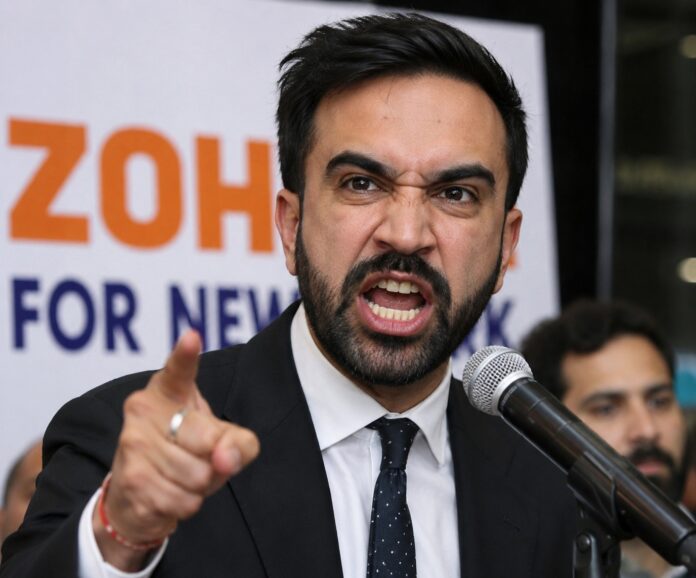
Mayor Zohran Mamdani maintained Wednesday that New York City’s new pied-à-terre tax will generate $500 million annually, even as city officials have dramatically reduced the number of properties potentially subject to the controversial levy.
“We continue to be confident in that assessment of what the annual revenue will look like,” Mamdani told reporters Wednesday.
His comments came after the city disclosed that the Department of Finance is sending revised notices to 10,800 property owners who must demonstrate that their New York City residences are their primary homes.
That figure represents a substantial drop from the approximately 17,000 notices initially mailed by the Department of Finance when the city began implementing the tax on high-end second homes late last month.
The rocky rollout has generated widespread confusion among property owners and prompted a major lawsuit challenging the tax. Court filings submitted Tuesday revealed the reduced number of notices and showed that city officials had once again extended the deadline for affected homeowners to seek exemptions.
The shrinking pool of potentially taxable properties is also fueling skepticism about whether the levy can actually produce the $500 million in annual revenue projected by city and state officials.
Jared Walczak, a senior fellow at the Tax Foundation, said the declining number of properties raises legitimate questions about the reliability of the original estimate.
“When you have a tax base that starts with 17,000 and continues removing properties by the thousands, there is every reason to believe that the estimate is too high and the city based it on incomplete and overreaching assumptions,” he said.
Walczak argued that officials have enough updated information to revisit their calculations rather than continue relying on the initial projection.
“This is doable — they could do a new estimate with knowledge of homes that come off the rolls. It’s not a hard calculation to make.”
The pied-à-terre surcharge emerged from Mamdani’s broader push for Albany to approve a series of “tax the rich” initiatives aimed at raising additional revenue for New York City.
Gov. Kathy Hochul resisted many proposals to impose additional taxes on wealthy New Yorkers but ultimately worked with state lawmakers to approve the pied-à-terre tax as a measure intended to strengthen the city’s troubled finances.
Under the legislation, the surcharge applies to one- to three-family homes valued at $5 million or more and to condominiums and cooperative apartments valued at at least $1 million when those properties are not occupied as their owners’ primary residences.
When Hochul promoted the proposal during the spring, her administration estimated that approximately 10,000 properties across New York City would be subject to the tax, producing an estimated $500 million annually.
An April analysis by City Comptroller Mark Levine, however, questioned whether the tax would come close to reaching that revenue target.
Levine’s analysis projected that approximately 11,000 properties would qualify and estimated that the city would likely collect between $340 million and $380 million annually — significantly below the $500 million figure.
Despite those projections, both Hochul and Mamdani have continued to stand behind the $500 million annual revenue estimate.
Pressed Wednesday about why the number of potentially affected properties had fallen so substantially, Mamdani said the original 17,000 notices were sent before city officials had access to residents’ 2025 income-tax filings.
“That is something that is typically released in February of the next calendar year,” he said. “The state has now provided us with early access to those filings.”
According to Mamdani, the updated tax information allowed the city to narrow the group of property owners receiving the latest round of notices, resulting in the smaller figure of 10,800.
Hochul, meanwhile, has largely distanced herself from the difficulties surrounding the tax’s implementation, maintaining that responsibility for carrying out the new law rests with the Mamdani administration.
The governor also made clear Wednesday that she does not support expanding the concept beyond New York City after some upstate Democrats floated the possibility of allowing municipalities elsewhere in the state to impose similar taxes on expensive second homes.
“I’m not interested in seeing it rolled out upstate. This was specifically intended to help the City of New York get through a financial crisis,” Hochul told reporters following an unrelated event.
{Matzav.com}