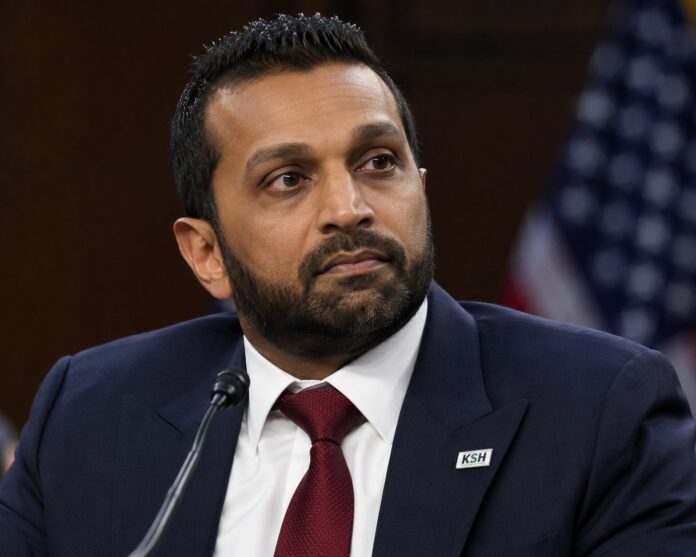
FBI Director Kash Patel has sharply expanded the bureau’s efforts to capture fugitives overseas and return them to the United States, with the agency carrying out 157 extraditions and 86 foreign transfers of custody during Patel’s first 18 months in charge.
FBI figures obtained by Fox News Digital show that Patel personally made 100 calls to international partners during that period as part of the push to strengthen cooperation with foreign governments. By comparison, his predecessor, Christopher Wray, made nine such calls during the final 18 months of the Biden administration.
The FBI said extraditions have risen 65% compared with the final 18 months of the Biden administration. Foreign transfers of custody, known as FTOCs, increased by 54%. Such transfers involve suspects or fugitives apprehended outside the United States and subsequently placed in American custody.
Patel credited the increased activity to closer relationships between the Trump administration and foreign governments, as well as cooperation between the FBI and Justice Department.
“When I became FBI Director, I made clear that we would relentlessly manhunt high-value targets from overseas, and we’ve delivered,” FBI Director Kash Patel told Fox News Digital. “It’s a direct result of President [Donald] Trump’s relationships with foreign governments, which allow us to work in spaces where we were never permitted to before — and Attorney General Todd Blanche’s leadership giving us the legal tools we need to return these subjects back to America to face charges.”
“These targets are literally the worst of the worst and we will give them no sanctuary,” Patel added.
One of the most recent high-profile cases involved Alexis Flores, a Honduran national who had previously appeared on the FBI’s Ten Most Wanted Fugitives list. Flores was extradited to Philadelphia on Monday after spending approximately 25 years on the run in connection with the alleged rape and murder of a 5-year-old girl.
Flores was arrested in Honduras in February, and authorities there subsequently approved his extradition to the United States. According to the FBI, he had been removed from the Ten Most Wanted list in March 2025 because the previous Honduran government would not extradite him for the alleged crimes, citing restrictions under the country’s laws.
Patel said at the time Flores was returned to the United States that the FBI had completed more than 70 extraditions since June alone.
Another case highlighted by the bureau involved Zobaidul Amin, a Bangladeshi national who was extradited from Malaysia in March to face federal charges stemming from what authorities have described as an extensive online child exploitation operation.
Federal prosecutors allege that Amin impersonated a teenager on Instagram and Snapchat to target hundreds of minors, including children as young as 11, and pressure them into creating explicit images and videos. Authorities allege that he then threatened to distribute the material to victims’ relatives, friends and classmates unless they provided additional images.
The FBI has also pointed to the case of Abdullah Anwar, a 28-year-old Texas resident who was returned from Qatar to face fraud charges. Authorities say Anwar fled the United States for Pakistan before being arrested in Qatar, whose government subsequently agreed to send him back to Texas.
The bureau has made overseas apprehensions and extraditions a major priority under Patel, with the director significantly increasing his direct contacts with international law enforcement and government officials.
According to FBI figures, Wray made 20 calls to foreign partners between 2022 and 2025, including nine during his final 18 months under the Biden administration. Patel, by comparison, logged 100 such calls during his first 18 months as director — 400% more than Wray made during the cited four-year period and a 1,011% increase compared with Wray’s final 18 months.
International extradition cases generally require extensive coordination between the FBI, Justice Department and foreign authorities. The FBI typically works with overseas law enforcement agencies to locate and apprehend suspects who have fled the United States or are otherwise wanted on American charges.
After a fugitive is taken into custody overseas, the Justice Department can formally seek the suspect’s extradition under applicable treaties and agreements. If the foreign government approves the request, FBI personnel travel to the country, assume custody of the suspect and transport the individual back to the United States to face prosecution.
{Matzav.com}