A surge in serious injuries and deaths involving children riding e-bikes and other electric vehicles is prompting officials across the country to impose tougher restrictions — and, in one California county, prosecutors are taking the extraordinary step of pursuing criminal charges against parents accused of allowing their children to illegally ride the vehicles, the AP reports.
The prosecutions represent one of several approaches being taken as communities grapple with the rapidly growing popularity of electric bikes, scooters and motorcycles. Parents, meanwhile, are being forced to navigate a confusing collection of state and local regulations governing which vehicles children may legally ride and under what circumstances.
New York City recently issued cease-and-desist notices to dozens of online retailers accused of marketing vehicles as e-bikes even though they are not legal for use on city streets. The action followed the death of a 17-year-old riding an illegal electric vehicle. Across the Hudson River, New Jersey has adopted new requirements mandating that e-bike riders be at least 15 years old and obtain both a license and vehicle registration.
But critics question whether the growing assortment of regulations is targeting the problem effectively. Bicycle advocates warn that overly broad rules could unfairly lump traditional, lower-powered e-bikes together with much faster electric motorcycles, while some parents argue that a scattered collection of local and state laws is inadequate.
Monica Stafford, a mother in the San Francisco area whose teenage daughter fractured her skull after falling from an e-bike, said authorities are “missing the mark” if their response focuses exclusively on blaming parents. Stafford, who lives in San Rafael, said the country needs one consistent national framework.
“We’re in a total Wild West of laws,” Stafford said. “Being for common sense laws doesn’t mean that you’re against e-bikes, just like you can be for cars but not think that it’s safe to put keys in the hands of a 10-year-old.”
Electric bikes and similar vehicles have become commonplace across the country in recent years. Groups of teenagers can routinely be seen riding them in California coastal communities, while thousands of delivery workers rely on them to navigate New York City’s crowded streets.
As the vehicles have become more popular, emergency-room visits involving injuries from e-bikes, e-scooters and other motorized devices have climbed sharply, according to multiple studies. Researchers say the particularly troubling findings involve both the severity of those injuries and the disproportionate number involving younger riders.
“The big takeaway is that people are generally more severely injured than they would be if they were on a traditional, pedal bicycle,” said Dr. John Austin, a physician at the University of California San Diego School of Medicine who led a recently published statewide study. “Overall, these patients tend to be younger, they tend to be unhelmeted and, in turn, be more severely injured.”
Under federal law, most e-bikes are treated as nonmotorized vehicles in much the same way as conventional bicycles. That generally means riders do not need a driver’s license or insurance and, under federal rules, are not necessarily required to wear helmets. Many states, however, have adopted additional regulations for more powerful models, including age restrictions and helmet mandates.
New York City has been confronting the issue with renewed urgency following the death of 17-year-old Gabriel Nacato in a crash only steps from City Hall. Nacato had been riding a vehicle advertised as an “e-bike,” although it was not legal for use on city streets.
Earlier this month, Mayor Zohran Mamdani notified more than 40 online sellers, including Amazon, Walmart and Target, that they could be fined as much as $2,000 for each sale of an e-bike that violates city regulations.
New York state law requires riders of every category of e-bike to be at least 16 years old. New York City has imposed further limitations, including a maximum speed of 15 mph. California has no statewide minimum age for less powerful e-bikes, although riders must be at least 16 to operate models capable of reaching 28 mph.
New Jersey and Illinois are among the states that have recently enacted statewide regulations, while Massachusetts lawmakers are considering additional measures. Florida took a different approach in June, when Gov. Ron DeSantis vetoed proposed regulations that included a 10 mph speed limit, arguing that the restrictions could result in “enhanced surveillance” of citizens.
Orange County District Attorney Todd Spitzer has gone considerably further. His Southern California office has more than two dozen active investigations involving parents after establishing a specialized unit focused on cases in which children operate e-bikes and electric motorcycles.
Prosecutors have already charged four parents, including the mother of a 14-year-old boy accused of fatally striking an elderly pedestrian while operating an electric motorcycle.
An attorney representing that mother declined to comment. But Mitchell Krems, who represents another parent facing prosecution, called the charges against his client “absurd” and argued that the parent was being turned into a “scapegoat.”
Richard Eyssallenne has pleaded not guilty to child endangerment charges. Prosecutors allege that he purchased an electric motorcycle for his 12-year-old son and helped the child illegally modify the vehicle so it could travel faster. The boy subsequently ran a red light and was struck and injured by a car.
Other communities are also exploring ways to make parents legally responsible for their children’s conduct. In an Ohio suburb of Columbus, recently enacted e-bike regulations explicitly provide that parents who knowingly permit their children to violate the rules can face the same penalties imposed on the young riders themselves.
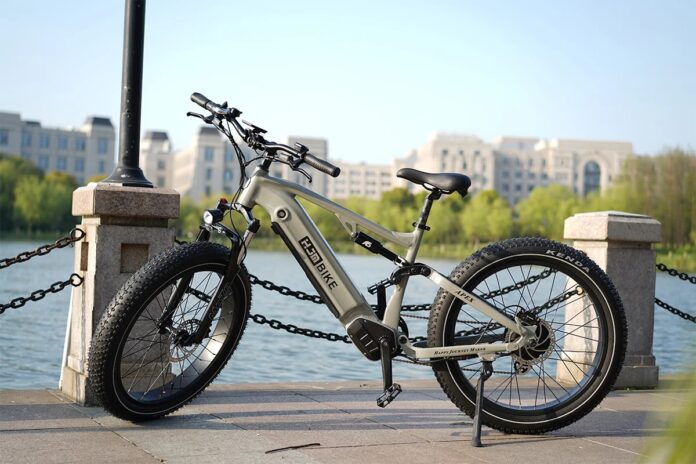
Bicycle advocacy organization PeopleForBikes argues that much of the controversy stems from vehicles that are not truly e-bikes at all. The organization says many dangerous machines being sold under the e-bike label are effectively electric motorcycles, featuring large motors, substantial frames and heavy-duty tires.
Advocates maintain that conventional pedal-assisted and lower-powered e-bikes have been safely used on American roads for decades and can play an important role in reducing dependence on automobiles.
“Many of the dangerous behaviors people cite — running red lights, riding on sidewalks, not wearing helmets — are already illegal,” said Chloé Lauer, executive director of the San Diego County Bike Coalition. “We’d rather see those laws enforced than add new restrictions that limit mobility for kids who are riding responsibly.”
Anya Dalal, a 17-year-old high school senior from the San Francisco area who has advocated for stronger safety protections, said there is unlikely to be a single solution. She supports age restrictions but believes responsibility should extend beyond parents alone.
“It should be a mix of parental accountability, accountability from the manufacturers and retailers and also education for kids to understand e-bike laws and road rules,” said Dalal, who lives in Hillsborough.
San Diego-area mother Sharon Franke similarly believes parents have an important role to play. She said adults should research the vehicles their children use, ride alongside them when they are learning and continue emphasizing safe practices once youngsters begin riding independently.
“We want them to have fun, but we also want them to come back safe and we don’t want them to hurt anybody,” Franke said as her 15- and 12-year-old sons prepared to participate in a safety course last weekend. “How do you balance all of it? It’s just overwhelming right now.”
{Matzav.com}