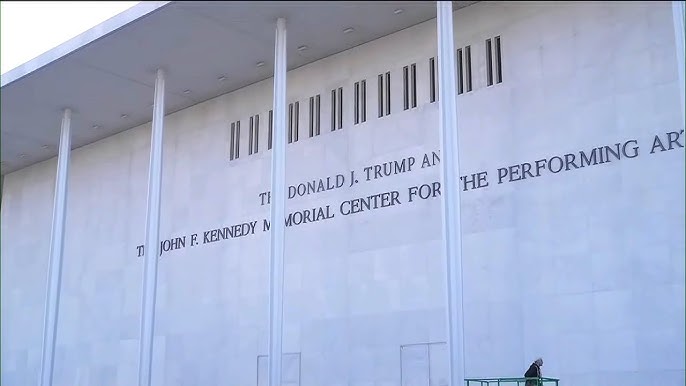
The Kennedy Center is set to undergo a sweeping two-year closure to accommodate major renovation work after its board approved the plan on Thursday, according to two people familiar with the decision. While the main facility will shut down, some outdoor performances may continue during the construction period.
The vote, taken by a board made up largely of allies of President Donald Trump, reinforces an earlier proposal that leaders argued was essential to address significant safety and infrastructure concerns. Opponents, however, fear the closure could pave the way for broader changes as part of Trump’s ongoing effort to reshape Washington during his second term.
The individuals who disclosed the board’s decision spoke anonymously because they were not authorized to discuss the matter publicly before an official announcement.
The latest action comes after U.S. District Judge Christopher Cooper halted a previous closure that had been scheduled to begin on July 5. It remains unclear whether Thursday’s vote will trigger another court challenge. In his earlier ruling, Cooper wrote that the board’s March 16 approval of the shutdown appeared “ill-informed and seemingly preordained.”
With the project now moving forward once again, board members are expected to face renewed scrutiny over whether they fully evaluated all available alternatives before deciding on a complete closure.
Before Thursday’s meeting, Kennedy Center officials said directors would consider three possible paths. One called for shutting the entire complex, while another would have allowed portions of the building to remain open with “some continued public access and limited programming in spaces unaffected” by the renovations. Under that proposal, performances could have continued at the Reach, the center’s outdoor campus.
A third proposal would have avoided a full shutdown by implementing “a highly limited series of phased closures to address only the Center’s most serious infrastructure needs while scheduling and maintaining a full slate of programming.”
Shortly after returning to the White House in January 2025, Trump replaced the Kennedy Center’s leadership and installed a new board of trustees that subsequently elected him chairman. In December 2025, the board also added Trump’s name to the building, though Judge Cooper later ruled that action was unlawful.
Trump’s name was removed from the building in June, but the location where it had appeared remains concealed behind a large tarp. Cooper has directed the Kennedy Center to provide updates on how long the covering is expected to remain.
The renovation project is part of a broader campaign by Trump to remake prominent landmarks throughout the nation’s capital.
Among those efforts is the demolition of the White House East Wing to make room for a new ballroom. Construction on that project was ordered halted last week after an appeals court ruled that Congress had not approved it, though Trump has vowed to appeal the case to the Supreme Court.
Other initiatives have also encountered setbacks. Renovation work at the Lincoln Memorial Reflecting Pool has faced continuing problems after algae returned, while U.S. Attorney Jeanine Pirro disputed Trump’s assertion that vandalism was responsible for the damage.
At the same time, the administration continues to advance plans to renovate the golf course at East Potomac Park and construct a triumphal arch near Arlington National Cemetery.
Trump has repeatedly criticized the Kennedy Center, describing it as “rusted, rotted, and rat and bug infested.” After Cooper blocked both the closure and the addition of Trump’s name to the building, the president suggested turning the facility over to Congress.
Kennedy Center officials have maintained that the extensive renovation project is necessary because of the building’s deteriorating condition.
During a tour of the facility in April, Executive Director and Chief Operating Officer Matt Floca showed reporters areas with extensive water damage, saying corrosion had reduced some steel supports to the thickness of tissue paper. He also noted that major mechanical systems, including several 800-ton cooling units, are decades old and require replacement.
Floca said he had considered repairing the building in phases but ultimately advised Trump that a complete closure would be the most effective approach.
“When the president asked: ‘How do you make these projects the best? How do you make them really excellent and deliver them efficiently?’ my recommendation was you close the building and you do everything over a definite period of time, two years,” he said.
The ongoing legal and political controversy surrounding the Kennedy Center even became part of the entertainment during the presentation of the Mark Twain Prize for American Humor in late June, when comedian Bill Maher made the dispute part of his remarks.
At the beginning of the ceremony, Kennedy Center trustee Pamella Roland DeVos, who was appointed by Trump, emphasized the institution’s mission, calling it a “national cultural center open not just for some but for every American patron who wants to experience the greatest art and expression the world has to offer.”
“The responsibility that comes with it is one our board takes very seriously,” she said.
{Matzav.com}