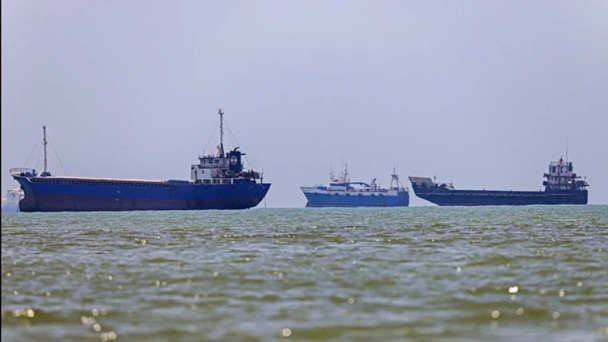
The U.S. Navy has been quietly escorting commercial tankers through the Strait of Hormuz, helping maintain a critical flow of oil from the Persian Gulf despite Iranian attacks that have dramatically reduced traffic through one of the world’s most important energy corridors.
The covertly coordinated effort has centered on a southern passage near Oman, allowing tankers to travel farther from Iran’s coastline while receiving protection from American military forces. According to a New York Times report, commercial traffic through the strait dwindled to a fraction of normal levels during much of the war after Iran began targeting civilian shipping.
Since May, however, U.S. forces have assisted more than 1,000 vessels in making their way through the strategic waterway, according to U.S. Central Command.
Prior to the outbreak of the conflict, approximately 15 million barrels of crude oil traveled through the Strait of Hormuz every day.
That volume plunged once fighting intensified and commercial vessels came under attack.
With more ships now traveling under U.S. protection, analysts cited by The Times estimate that oil traffic through the strait has recovered to approximately 5 million barrels per day.
American protection efforts have concentrated primarily on the southern section of the waterway, keeping participating ships nearer to Oman and putting additional distance between them and Iranian territory.
Tanker companies provide the U.S. military with information about planned transits and alert American forces when attacks or possible threats emerge. U.S. warships, helicopters and aircraft are positioned to respond when Iranian missiles or drones threaten vessels using the corridor.
Despite those defenses, ships traveling the protected route have continued to come under fire.
At least 15 vessels using the southern corridors have been struck since early June, according to a New York Times review of International Maritime Organization records.
Those incidents have left 16 sailors wounded and two dead, according to the newspaper.
Another ship was attacked near Oman this week, killing one crew member, according to United Kingdom Maritime Trade Operations, the maritime security organization overseen by Britain’s Royal Navy.
On July 19, two tankers operated by Greek shipping company Dynacom were struck, according to the International Maritime Organization. One of the damaged vessels was ultimately abandoned.
The United Arab Emirates’ government-owned oil company ADNOC has suffered particularly heavy losses, reporting attacks against 18 of its vessels. The incidents killed one crew member and wounded another 20.
Even with those casualties and continued attacks, the American escort operation has helped avert what could have become a substantially larger interruption in worldwide oil supplies.
Shipping analyst Michelle Wiese Bockmann characterized the southern shipping corridor as an unexpected success, noting that vessels have continued using the passage despite the persistent threat of attack.
Maintaining that protection, however, requires a substantial American military commitment.
U.S. forces must sustain defensive operations around the clock while remaining within striking distance of Iran’s missile arsenal.
The Navy currently has approximately 20 warships positioned in the Gulf of Oman.
The mission has also placed considerable logistical pressure on American forces. After Iranian strikes damaged the Navy’s Bahrain base, resupply vessels were forced to make trips to Diego Garcia, the British territory in the Indian Ocean. The change adds more than five days of sailing time in each direction.
Even with the American escorts, commercial traffic through the Strait of Hormuz remains far below the levels recorded before the war.
Numerous major shipping companies are still refusing to send their vessels through the waterway and are expected to remain on the sidelines unless a durable cease-fire is established.
For now, however, the Navy’s largely behind-the-scenes protection effort is enabling millions of barrels of oil to leave the Persian Gulf each day, reducing the risk that the conflict will trigger another severe surge in global oil prices.