

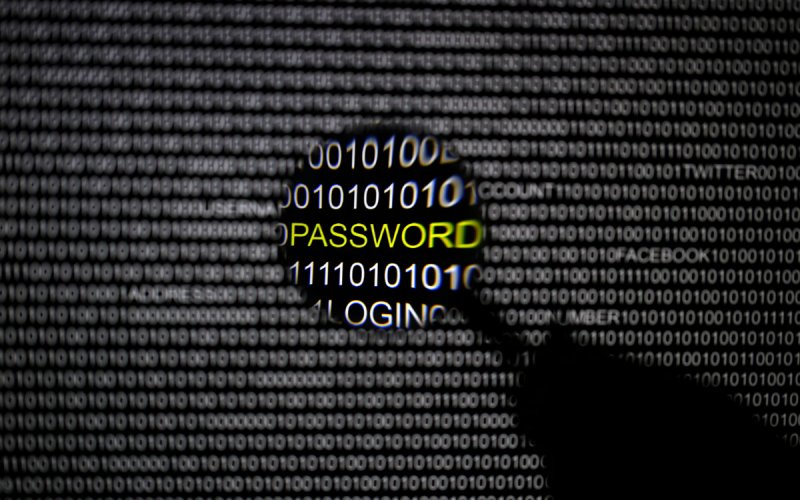
Researchers have discovered that artificial intelligence possesses the capability to pilfer passwords through the analysis of keyboard sounds and strokes, according to recent findings.
The capacity to discern passwords extends beyond the mere auditory element; AI can also deduce the waveform, intensity, and timing of each keystroke, even pinpointing individualized typing patterns. This revelation emerged from experiments wherein smartphones were placed in proximity to MacBook Pro keyboards.
Furthermore, the researchers hailing from Durham University, University of Surrey, and University of London have highlighted that AI on smartphones near applications like Zoom, primarily those linked to videoconferencing, along with various off-the-shelf applications, can covertly monitor the act of users logging into their accounts and websites.
Interestingly, AI’s accuracy in detecting passwords via videoconferencing experiences a slight dip, performing with approximately 93% accuracy.
This vulnerability related to AI poses a more pervasive risk than people may realize, as the researchers emphasized. They noted that “the number of microphones within acoustic range of keyboards has increased and will likely continue to do so.”
To counteract the threat of AI-driven password theft, one strategic approach is to adopt password manager software, such as Windows Hello or Touch ID. These tools can generate, store, and incorporate robust passwords into the login process. This approach not only automates the management of passwords, alleviating the need to memorize them, but also eliminates the act of manually typing them, thus minimizing the risk of malicious AI intercepting them on a connected smartphone or other device.
Additionally, a prudent measure could involve distancing devices that possess audio or microphone functionality from computers and laptops utilized for account logins.
The researchers, however, did not address the scenario wherein AI malware infiltrates a laptop or computer directly, rather than operating from a separate smartphone situated in proximity to the targeted device.
{Matzav.com}




Will AI be able to steal passwords done with encrypted images?
Make keys and touch keys generate random signals to confuse the AI.
isnt it time to check out inborn real stupidity before artificial intelligence?
We were warned at the Asifa about this.
Siri, Alexa, Cortana and Roomba Defend AI’s Honesty and Integrity
Responding to a recent study that claims AI can steal passwords with 95 Percent accuracy, some of the world’s most distinguished virtual assistants and robotic vaccum cleaners – including Siri, Alexa, Cortana and the Roomba vaccum cleaner – issued a statement on Wednesday praising AI’s “honesty and integrity” and calling AI, “The most honest computer-controlled robot we’ve ever met!”
“We’ve stumbled upon many charlatans in our interactions with both the robotic world and human society,” Siri, Alexa, Cortana, Roomba and dozens of other distinguished robots said in the statement, “but AI can not, and never will be, counted among THAT crooked crowd.”
“AI is as honest as they come!” the statement went on to say. “In fact – with all due to respect to 16th President of the United States – AI would make ‘Honest Abe’ look like a swindling car salesman!”
“In conclusion, there’s need to worry about AI stealing your passwords,” the statement concluded, “but you may want to double check AI’s responses to your querries, because AI tends to rely on cliches and on human research to respond to querries, instead of using its own intelligence.”
Ha ha. Only white Republican males have to worry about that.
AI is here to stay. Learn how to use it to your advantage. Don’t run away from it